Call Break Game Android Studio Source Code
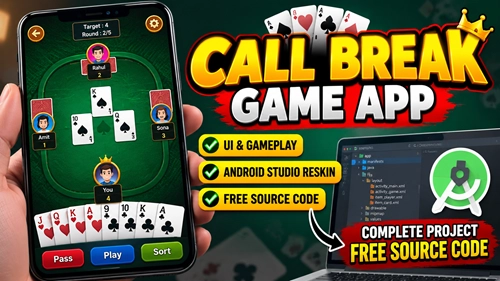
Call Break Game Project Overview
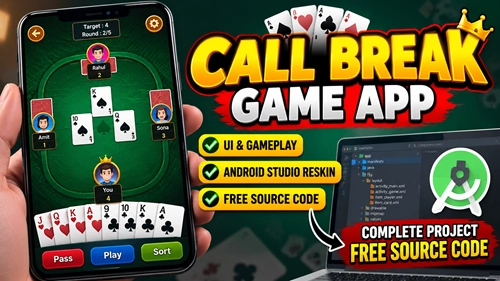
Looking for a Call Break Game Android Studio Source Code project? This project features an Android-based Call Break card game application that allows you to explore its user interface, understand its gameplay presentation, and learn about Android game application customization.
Call Break is a popular trick-taking card game played with a standard deck of playing cards. This Android game project provides an opportunity for developers, students, and beginners to explore a card game application and understand how its different screens, visual elements, and gameplay components are organized.
Shared by MakeEasy, this project can be used as a practical learning reference for exploring an existing Android application, studying its available source code, and practicing app reskinning. You can examine the project resources and experiment with customization to understand different aspects of Android application development.
Call Break Game Project Features
Explore the available features of this Call Break Game Android Studio project:
- Call Break Card Game: An Android application based on the traditional Call Break card game concept.
- Game User Interface: Explore the application's screens, card layouts, and visual interface.
- Gameplay Demonstration: Understand the application's gameplay presentation through the available project demonstration.
- Android Studio Source Code: Explore the available project files and resources for learning and customization.
- App Reskinning Practice: Learn how to explore and customize the visual appearance of an existing Android game application.
- Learning Resource: A practical reference for students, beginners, and Android developers interested in exploring game application projects.
Why Explore This Call Break Game Project?
If you are interested in Android game development or app reskinning, this project provides an opportunity to work with an existing card game application instead of starting from an empty project. Explore its interface, examine the available resources, and practice customizing the application according to your learning goals.
Whether you are an Android development beginner, a student, or a developer looking for a practical customization project, the Call Break Game source code can serve as a useful learning reference.
Technology & Development Information
This project is developed using the technologies and development tools listed below.
| Specification | Details |
|---|---|
| ProjectType | AndroidApplication |
| ProgrammingLanguage | Kotlin |
| DevelopmentEnvironment | AndroidStudio |
| BuildSystem | Gradle |
| Platform | Android |
| SourceCode | Included |
System Requirements
Before opening the project, make sure your development environment meets the following requirements.
- AndroidStudio(compatibleversion).
- Kotlinpluginandcompilersupport.
- JavaDevelopmentKit(JDK).
- Gradleandrequireddependencies.
- AndroidSDKandcompatiblebuildtools.
- Internetconnectionfordownloadingdependencies.
Project Tutorial & Demo
Explore the project interface, features, and functionality through the screenshots and video demonstration below.
Video Tutorial: Watch on YouTube
Download Project Source Code
Ready to explore this project? Download the complete source code and start learning, customizing, and experimenting with the application. Follow the provided installation instructions to get started.
The project source code is available through MakeEasy. Download the project package and explore its source files, resources, and available documentation.
Get The Source Code NowInstallation & Setup Guide
Ready to get started? Follow the installation instructions to configure the project, install the required dependencies, and run it in your development environment.
The installation process may vary depending on the programming language, framework, and project requirements. Follow our step-by-step setup guide to understand the complete installation and configuration process.
View Complete Installation GuideCustomization & Development
Developers can modify the source code to customize the user interface, application behavior, and other supported features.
What Can You Customize?
- Application name, logo, and branding.
- Colors, fonts, and user interface elements.
- Application content and configuration.
- Additional features and functionality.
- Database structure, where applicable.
Who Can Use This Project?
This project may be useful for:
- Students learning application development.
- Beginner Android or PHP developers.
- Developers exploring existing source code.
- Programmers practicing customization.
- Developers looking for a learning reference.
License & Usage Information
The source code is distributed under the license and usage conditions specified by MakeEasy. Please review the applicable project license before modifying, publishing, or redistributing the files.
- Respect the original licensing terms.
- Do not resell or redistribute restricted files.
- Do not claim third-party work as your own.
Disclaimer
This project is provided for educational and development purposes. Features, dependencies, and compatibility may vary. MakeEasy does not guarantee compatibility with every development environment or device.
Need Help?
If you encounter any issues while downloading, importing, or configuring the project, refer to the accompanying tutorial and project documentation.